
 EN
EN


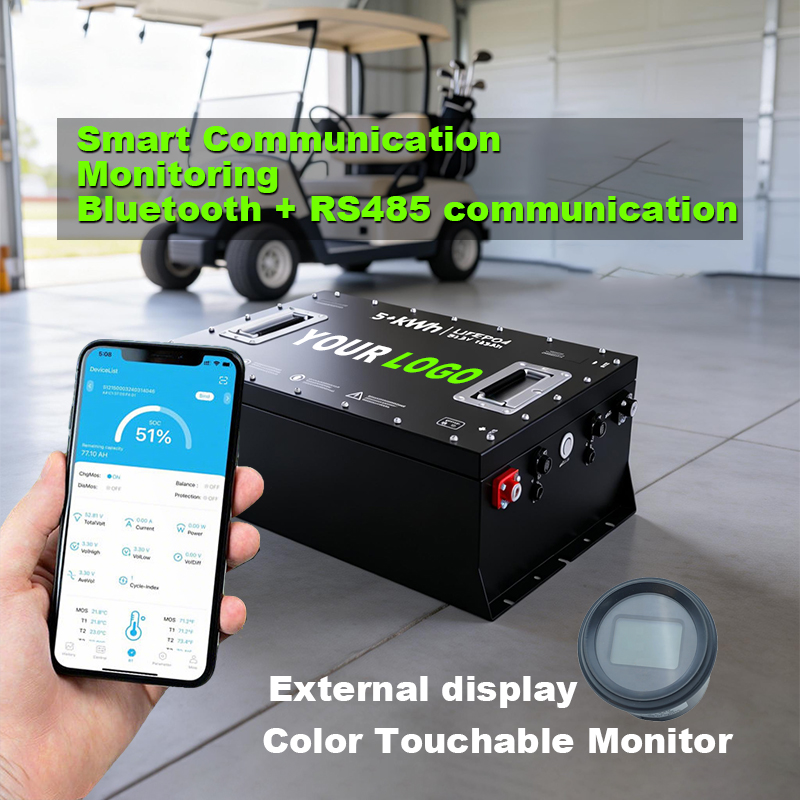
If you are still running your golf cart on traditional flooded lead-acid batteries, you are missing out on the massive efficiency gains of 2026 battery technology. Upgrading to a lithium iron phosphate (LiFePO4) system is no longer a luxury—it’s a high-return investment for both private owners and commercial golf course fleets.
However, the most common dilemma buyers face is choosing the right system voltage: Should you deploy a 48V configuration, or step up to a high-performance 72V system?
Below, we break down the definitive data points, costs, and structural differences to help you make an informed decision, featuring commercial-grade solutions from CTS Battery, a leading global OEM/ODM lithium battery supplier.
Head-to-Head Comparison: 48V vs. 72V Lithium Systems
When evaluating your golf cart’s powertrain, the choice of voltage directly dictates your top speed, torque efficiency, and thermal management.
|
Feature |
48V LiFePO4 System |
72V LiFePO4 System |
|
Primary Use Case |
Standard golfing, flat neighborhood cruising, light utility work. |
Steep terrains, lifted custom carts, high-speed street-legal driving. |
|
Average Top Speed |
19 – 24 mph (30 – 38 km/h) |
35 – 45 mph+ (56 – 72 km/h+) |
|
Acceleration & Torque |
Standard; predictable power delivery. |
Instantaneous acceleration; high hill-climbing gradeability. |
|
Thermal Efficiency |
Moderate amp draw creates standard operating temperatures. |
Lower amp draw at equivalent wattage reduces heat by approx. 25%. |
Why Voltage and Amperage Matter: The Physics of Efficiency
Many cart owners ask why 72V systems feel so much more powerful. It comes down to Joule's Law of Heating ($P = I^2R$). To achieve the same power output (Wattage) as a 72V pack, a 48V pack must draw higher current (Amperage). Higher amperage means more heat resistance generated in your controller and motor.
By upgrading to a CTS Battery custom 72V solution, the operational current is significantly reduced. This preserves your electronic components and maximizes your range per charge.
The CTS Battery Advantage: Built for 6,000+ Deep Charge Cycles
Not all lithium batteries are engineered equally. Traditional grade-B cells degrade fast under heavy acceleration. CTS Battery solves this by engineering custom-tailored LiFePO4 solutions specifically for tough golf cart duty cycles.
Expert Insight from the CTS Engineering Team:
"Our latest 48V and 72V golf cart battery packs utilize standard automotive-grade square cells, paired with a proprietary Smart BMS (Battery Management System). This limits cell imbalance to less than 20mV, guaranteeing a lifespan exceeding 6,000 cycles at 80% Depth of Discharge (DoD)."
Key Benefits of Upgrading to CTS Lithium Packs:
Massive Weight Reduction: Shed up to 300 lbs (136 kg) compared to 6 lead-acid batteries, immediately improving brake response and reducing turf compaction.
Zero Maintenance: No watering, no terminal corrosion scraping, and zero toxic acid leaks.
Rapid Charging: Reaches 100% capacity in under 2.5 to 3 hours using specialized CTS fast-charging protocols, compared to 8+ hours for lead-acid.
If your daily route consists of standard golf fairways and paved resort paths, a CTS 48V Lithium Battery provides the perfect economic sweet spot. However, if you manage steep inclines, require a high-speed fleet, or operate heavy-duty utility vehicles, upgrading to a CTS 72V system ensures optimal torque and thermal safety.
If you are considering upgrade your golf cart battery, Contact us today for a tailored quote and solution proposal →