
 EN
EN


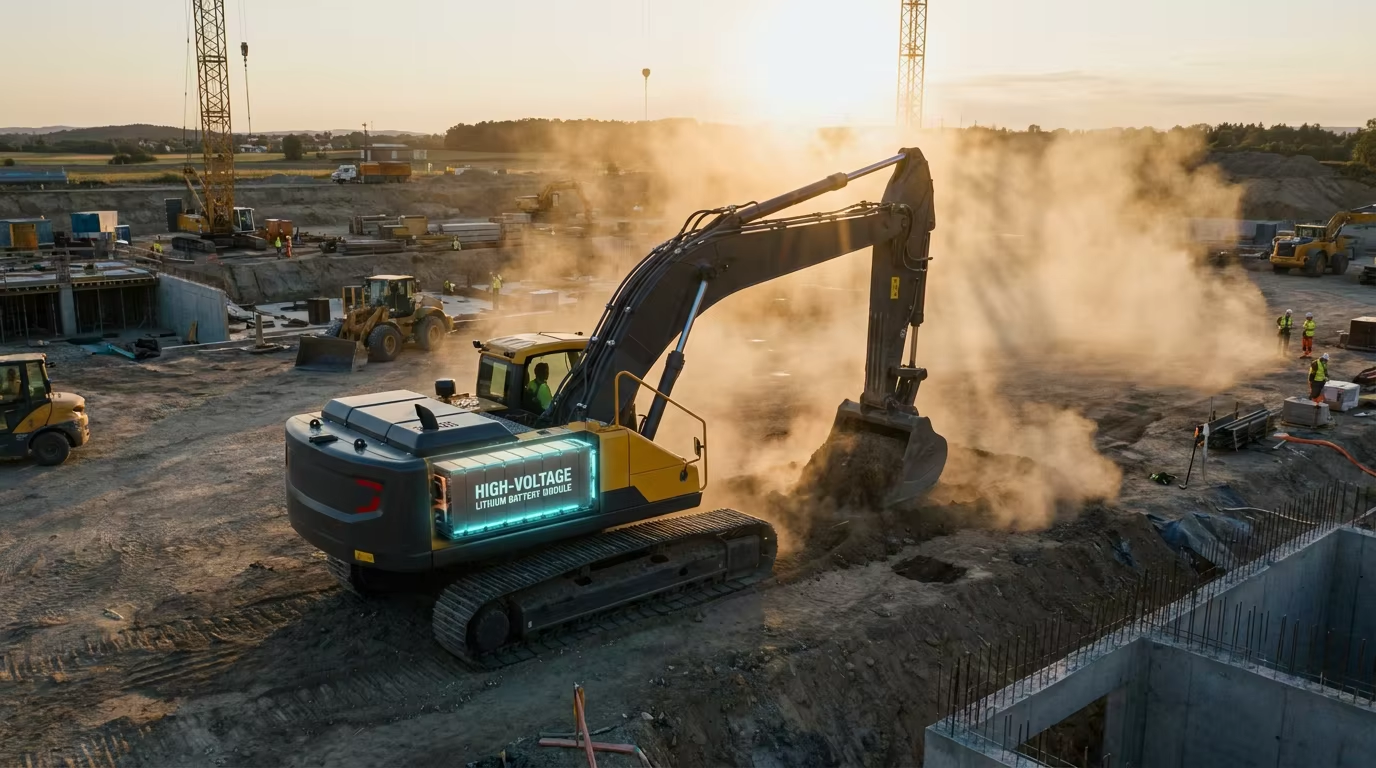
A modern electric excavator powered by a high-voltage lithium battery system — the new standard for zero-emission construction sites.
The Construction Site Is Changing — Fast
Walk onto a major construction site in Europe, North America, or Southeast Asia today, and you may notice something unusual: silence.
No diesel rumble. No exhaust fumes hanging in the air. Just the clean whir of electric motors and the efficient hum of hydraulics powered by lithium battery systems.
This is not a vision of the future. It is happening right now.
The global electric construction equipment market was valued at USD 15.8 billion in 2025 and is projected to grow at a CAGR of 20.8% through 2035, according to GM Insights. Behind this acceleration is one critical technology: high-voltage battery systems purpose-built for heavy-duty construction machinery.
What Is a High-Voltage Battery System for Construction Machinery?
A high-voltage battery system for construction equipment is not a scaled-up version of a power tool battery. It is a complete, engineered energy platform designed to replace diesel powertrains in demanding applications including:
- Hydraulic excavators (mini to 20-tonne class)
- Wheel loaders
- Compact track loaders and skid steers
- Aerial work platforms (AWPs)
- Concrete mixers and pavers
These systems typically operate in a voltage range of 48V to 800V, depending on machine size and power demand. A mini electric excavator such as the Komatsu PC33E-6 uses a 35 kWh lithium-ion pack, while larger machines from manufacturers like Pon Equipment use 576–797V systems with ~94 kWh capacity.
The battery system is not just a pack of cells. A complete high-voltage battery system for construction machinery includes:
- Lithium cell modules —(LiFePO4 or NMC chemistry)
- Battery Management System (BMS) — monitors voltage, temperature, state of charge, and state of health
- Thermal Management System — liquid cooling or air cooling to maintain optimal operating temperature
- High-voltage safety components — contactors, fuses, and isolation monitoring
- CAN/CANopen communication interface —enabling integration with machine controllers
Three Forces Driving Electrification of Construction Equipment
1. Tightening Emissions Regulations
Governments worldwide are imposing strict limits on non-road mobile machinery (NRMM) emissions. The EU Stage V standard, the US EPA Tier 4 Final regulations, and China's Stage IV standards have already pushed diesel engine development close to its practical limits.
Urban construction is under particular pressure. Cities including London, Amsterdam, and Oslo have designated zero-emission construction zones, mandating electric equipment for city-center projects. This regulatory reality is not negotiable for OEMs and contractors.
2. Total Cost of Ownership (TCO) Advantages
Initial acquisition cost remains higher for electric equipment — but the TCO math increasingly favors electrification.
A 20-tonne electric excavator saves approximately USD 12,620 per year in fuel costs alone compared to its diesel counterpart, according to industry analysis published in 2026. Add significantly lower maintenance costs — no oil changes, no diesel particulate filters, no complex exhaust after-treatment systems — and the payback period compresses to 3–5 years in high-utilization applications.
|
Cost Factor |
Diesel |
Electric (Lithium Battery) |
|
Fuel / Energy |
High |
60–75% lower |
|
Scheduled Maintenance |
High |
Significantly reduced |
|
Emissions Compliance Cost |
Increasing |
Zero |
|
Downtime (engine failures) |
Moderate–High |
Lower |
3. Jobsite Performance and Productivity
Electric drive systems deliver instant torque with no warm-up time, no altitude power loss, and consistent performance across the duty cycle. In confined spaces — tunnels, underground projects, enclosed warehouses — the absence of exhaust gases is not just a regulatory requirement but a worker safety imperative.
High-voltage battery systems from leading suppliers now support opportunity charging: topping up the battery during breaks or shift changes, rather than requiring a full overnight charge cycle. This capability is eliminating one of the last remaining concerns about electric equipment productivity on multi-shift sites.
LiFePO4 vs. NMC: Which Chemistry Is Right for Construction?
Two lithium chemistries dominate the construction machinery segment:
LiFePO4 (Lithium Iron Phosphate)
- Superior thermal stability — far lower risk of thermal runaway
- Longer cycle life: 2,000–4,000+ cycles at 80% DoD
- Slightly lower energy density but outstanding safety profile
- The preferred choice for high-duty-cycle, safety-critical applications
NMC (Lithium Nickel Manganese Cobalt Oxide)
- Higher energy density — more kWh in a given volume and weight
- Preferred where weight and space are tightly constrained
- Requires more sophisticated thermal management
- Used in applications where maximum power density is required
For most construction machinery applications, LiFePO4 is the industry standard due to its combination of safety, longevity, and proven field performance in harsh environments.
What OEMs and Equipment Manufacturers Should Look for in a Battery System Supplier
Selecting a high-voltage battery system is a supply chain decision that shapes your product's safety, reliability, and regulatory compliance for the machine's entire service life.
Key evaluation criteria:
1. Customization capability — can the supplier design cell modules, pack geometry, and voltage/capacity to your specific machine envelope?
2. BMS intelligence — does the BMS support SOC/SOH estimation, fault logging, and CAN integration with your machine controller?
3. Certification coverage — UN38.3, IEC 62619, CE, and relevant regional certifications
4. Thermal management engineering — liquid cooling design for high duty-cycle applications
5. After-sales support and field service network
The construction industry's transition from diesel to electric is no longer a question of if — only how fast. OEMs that move early on sourcing robust, certified high-voltage battery systems are building a durable competitive advantage: lower machine emissions, better TCO for end users, and compliance confidence as regulations tighten.
At CTS Battery, we engineer high-voltage lithium battery systems purpose-built for construction machinery OEMs. From compact mini excavators to heavy-duty loaders, we deliver customized battery solutions with integrated BMS, thermal management, and full certification support.
Ready to explore a battery system for your next electric machine platform? Contact our engineering team for a technical consultation.
Table of Contents
- The Construction Site Is Changing — Fast
- What Is a High-Voltage Battery System for Construction Machinery?
- Three Forces Driving Electrification of Construction Equipment
- LiFePO4 vs. NMC: Which Chemistry Is Right for Construction?
- What OEMs and Equipment Manufacturers Should Look for in a Battery System Supplier