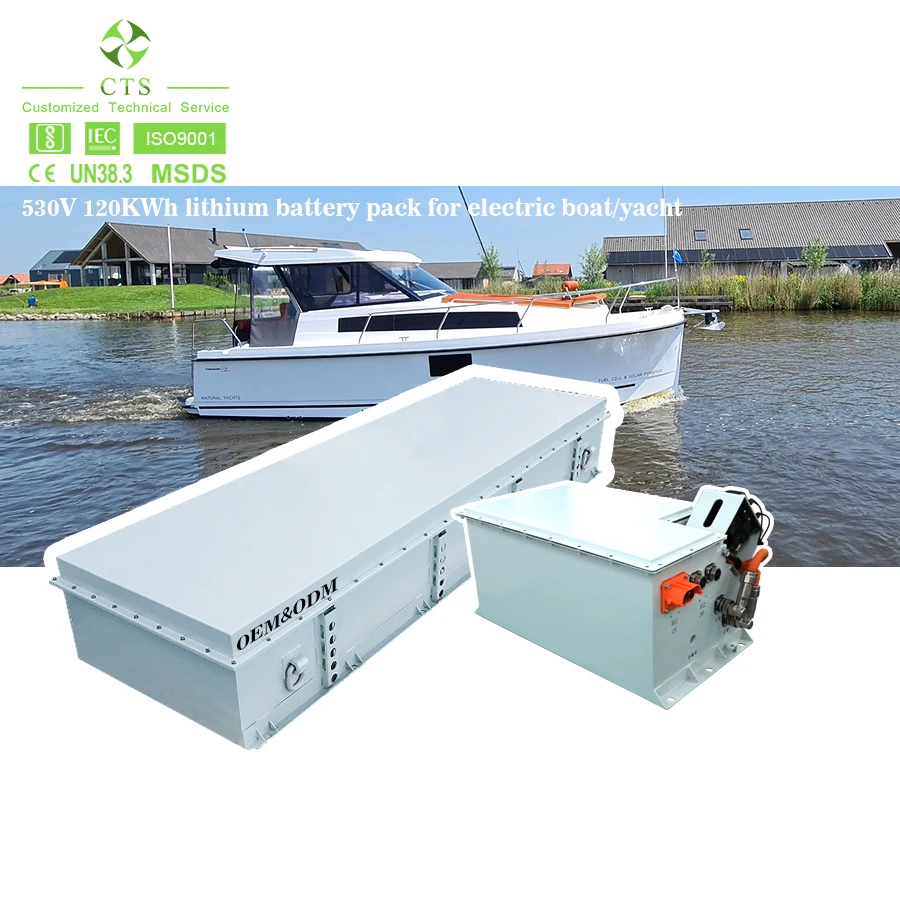
Marine electrification is creating new opportunities for boatbuilders, marine equipment manufacturers, and system integrators. As vessel designs and onboard electrical systems evolve, choosing the right battery supplier has become an important part of product development.
A battery solution must do more than meet voltage and capacity requirements. It should also fit the intended application, integrate with the electrical architecture, and satisfy the project's environmental, installation, and safety requirements.
As METSTRADE 2026 approaches, CTS Battery invites marine industry professionals to explore the key considerations when sourcing a customized lithium battery system.
Different marine applications have different energy demands.
For example, auxiliary power systems, onboard equipment, electric propulsion systems, and specialized marine machinery may require different voltage ranges, usable energy, continuous current, peak current, and operating strategies.
Before selecting a battery supplier, define:
A supplier that understands your application can help translate these requirements into a more suitable battery system design.
The battery management system is a key component of a lithium battery system. Depending on the application, project discussions may cover cell monitoring, voltage and temperature protection, current limits, communication interfaces, and integration with the vessel's control system.
For OEM projects, communication compatibility is particularly important.
Discuss your preferred protocols, data requirements, system interfaces, and integration responsibilities with your battery supplier early in the development process. This can help identify technical gaps before prototype testing and production.
Standard battery products may suit some applications, but other projects require application-specific engineering.
Depending on the project, customization may involve:
The right supplier should be able to evaluate these requirements systematically and establish a clear development process with your engineering team.
Marine battery requirements depend on the vessel type, intended use, installation location, and applicable regulations.
Before placing an order, clarify the required product certifications, transport documentation, electrical protections, validation procedures, and any vessel-specific approval requirements.
Do not assume that a general battery certificate automatically satisfies every marine application. Confirm the relevant standards and approval requirements with your project stakeholders and the appropriate certification bodies.
For marine OEMs and distributors, supplier selection is not just about an initial purchase price.
Consider the supplier's engineering communication, customization workflow, quality management, production capability, documentation support, and ability to support future product revisions.
A collaborative supplier relationship can help streamline development, improve project coordination, and establish a more consistent supply process.
CTS Battery is looking forward to meeting marine industry professionals at METSTRADE 2026 in Amsterdam from November 17–19.
As a customized lithium battery system manufacturer, we welcome discussions with boatbuilders, marine equipment manufacturers, system integrators, and distributors seeking tailored battery solutions.
Bring your application requirements, target specifications, or upcoming project plans. Our team looks forward to exploring potential solutions and cooperation opportunities with you.
Event: METSTRADE 2026
Date: November 17–19, 2026
Location: RAI Amsterdam, The Netherlands
Booth: [05.656]
Ready to discuss your next marine battery project?
Contact CTS Battery to arrange a meeting at the show or discuss your requirements in advance.
 Hot News
2024-09-18
2024-12-25
2025-01-15
2025-09-30
2025-10-28
2025-10-30

 EN